


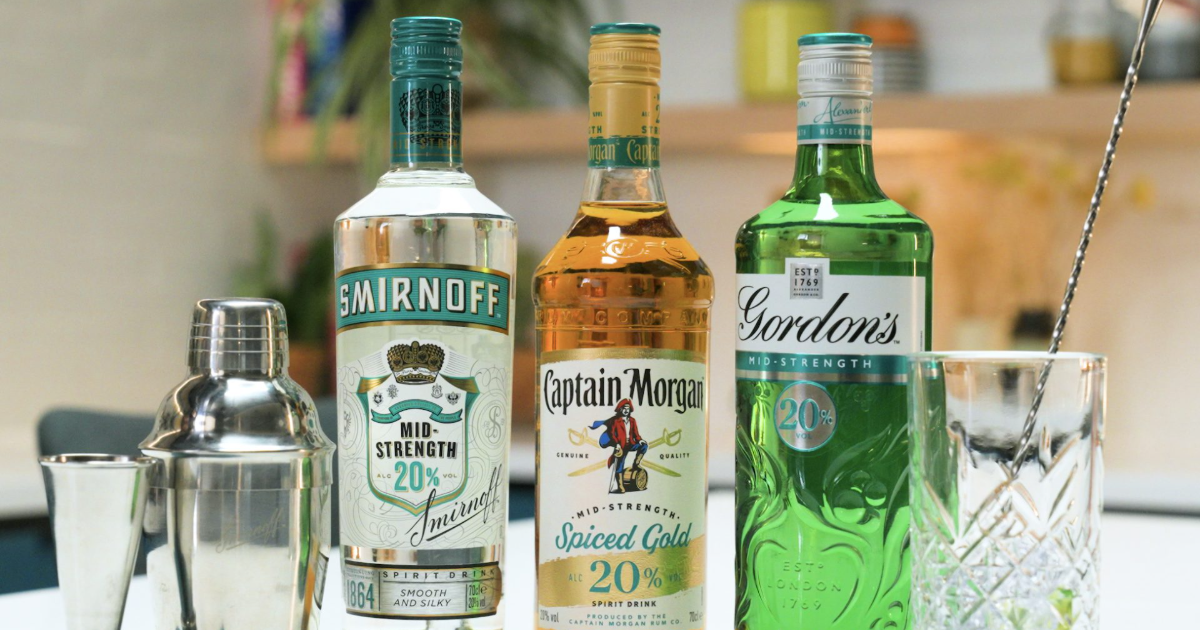
Diageo’s moving into mid-strength territory—and that’s a calculated play that could reshape how the industry thinks about ABV positioning.
Here’s what’s interesting about this move: Diageo isn’t experimenting at the margins. They’ve already proven they can scale non-alc spirits—which is its own achievement in a category most legacy spirits companies treated as a novelty five years ago. Now they’re building out the middle ground, and that tells you something about where they’re reading the market. Mid-strength spirits (typically 15–25% ABV) occupy an increasingly crowded but underdeveloped space between full-proof and zero. Most brands that own that real estate are craft-focused or import-driven. For Diageo to anchor major core brands there suggests they’re seeing real velocity in consumer demand that justifies manufacturing, supply chain, and shelf space investments.
The UK launch makes sense as a testing ground. British consumers have been early adopters of lower-ABV drinking—whether that’s sessionable ales, spritzers, or the broader “mindful drinking” movement. Diageo launching mid-strength variants of established brands (the press release is light on specifics, which is typical for brand strategy) likely means they’re leveraging production scale, distribution relationships, and brand equity that smaller competitors simply can’t match. For on-premise operators and retail buyers, this raises a real question: Do you stack mid-strength variants alongside the full-proof versions, or does this represent a tactical shift in how you allocate shelf real estate? That’s a conversation worth having with your Diageo rep in the coming months.
Here is The Proof
Diageo’s already scaled non-alc to material revenue. Now they’re not hedging their bets on low-ABV—they’re building depth across the spectrum. A major spirits house doesn’t invest in manufacturing and supply chain for a mid-strength range unless they’ve got hard data on category growth and shelf-velocity potential. That’s the kind of conviction that typically precedes market shift.
Watch this space. Diageo’s moves are rarely ahead of demand—they’re usually calibrated to it. If they’re confident enough to extend core brands into mid-strength, expect the market to follow, and expect similar moves from other major houses within 18 months. For buyers and bar operators, the real question isn’t whether mid-strength is a trend. It’s whether you’re positioned to capitalize on it when your suppliers finally take it seriously.
Comments are closed