


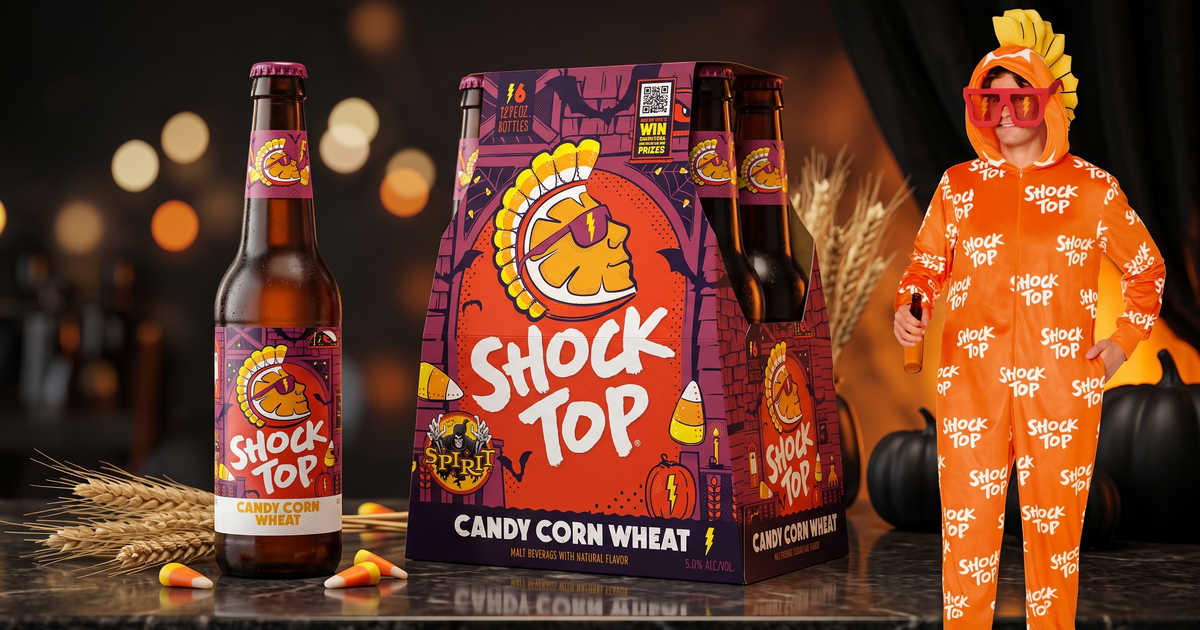
Shock Top just figured out what every mainstream beer brand should have done years ago: if you’re going to own Halloween, own the actual retail experience where people buy their costumes.
Look, seasonal beer releases are a dime a dozen. Every brewer from here to Portland drops something pumpkin-spiced or autumnal the moment Labor Day passes. But Shock Top’s move to partner with Spirit Halloween on a limited-edition candy corn beer and coordinated costume line is genuinely smart brand architecture. This isn’t just a product sitting on a shelf competing for eyeballs—it’s a vertical integration play. Spirit Halloween pulls millions of shoppers during peak season, and now Shock Top is literally in the room where the purchase decision happens. That’s distributor leverage. That’s trial generation. That’s the kind of retail placement that moves volume in ways traditional beer aisles can’t match.
The candy corn angle deserves credit too. It’s polarizing (people either love it or hate it), it’s unmistakably Halloween, and it gives Shock Top permission to play in a flavor space where they can actually own the conversation. A standard autumn ale blends into the noise. A candy corn beer? That’s talk-worthy. For retailers and bar managers, this is worth noting because it’s the kind of novelty that drives traffic and conversation without feeling like a gimmick—the costume tie-in means consumers are already in the mindset to try something different when they’re buying their outfit.
Here is The Proof
Shock Top isn’t just launching a seasonal SKU—they’re embedded in Spirit Halloween’s retail ecosystem during the highest-traffic retail season of the year. When a shopper is already walking out with a costume, upselling them into a limited-edition beer they literally can’t get anywhere else is a conversion play that traditional grocery and on-premise distribution simply can’t replicate. That’s a meaningful advantage in a crowded seasonal market.
For the industry, this is a template worth watching. Co-branded retail partnerships that put beer into non-traditional, high-traffic destinations during peak consumer moments are smart growth plays. Shock Top’s parent, Tilray, clearly sees value in reaching consumers where they’re already making discretionary purchases. Whether this becomes an annual tradition or a one-off, it signals that mainstream beer brands are getting more creative about where and how they capture seasonal demand. That’s good for innovation, and it’s good for buyers looking to stand out on limited-time offerings.
Comments are closed