


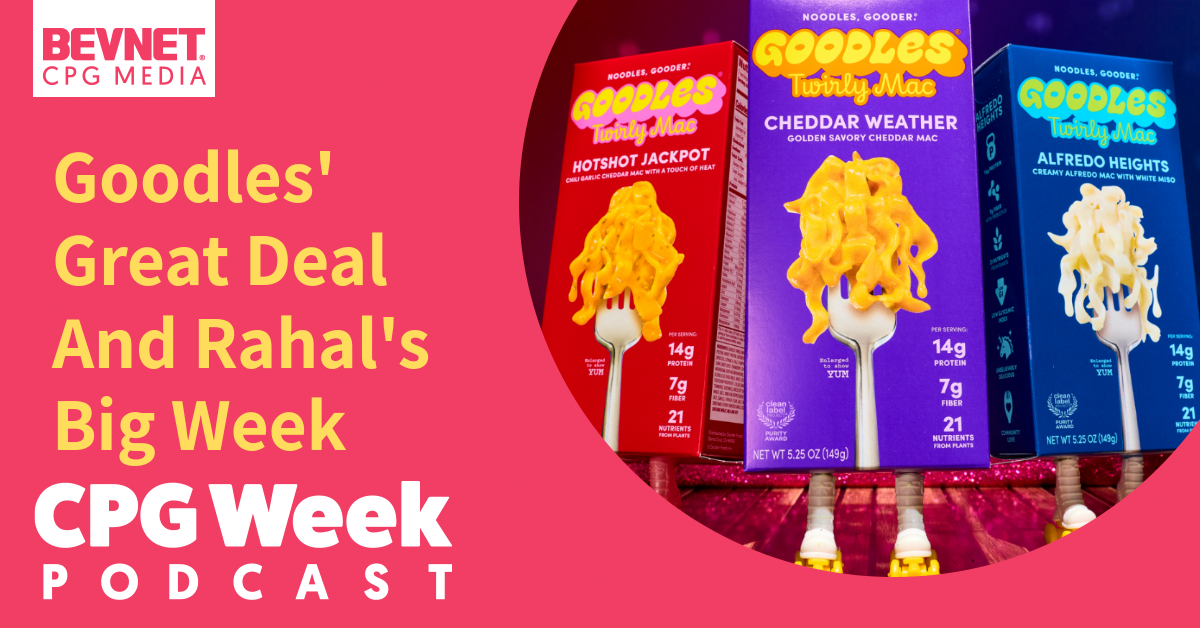
When a pasta brand catches the eye of a $3.6 billion food giant, it’s time to pay attention to what makes them different.
Goodles just closed a deal with Barilla—one of the most conservative, heritage-driven companies in the pasta category—and that alone tells you something. This isn’t a vanity acquisition or a tuck-in play. Barilla doesn’t buy brands to shelf them; they buy brands that move product and own a defensible position in their market. Goodles built something real: a better-for-you pasta line that actually tastes like pasta, not cardboard trying to apologize for its macronutrient profile. They cracked the code that stumps most functional food brands—delivering on nutrition without sacrificing the eating experience.
What makes this moment significant for the broader beverage and CPG space goes beyond one acquisition. We’re watching a fundamental shift in how legacy mega-brands value innovation. Goodles didn’t wait for Barilla to innovate around them; they built the innovation themselves, proved the demand, and then became too strategic to ignore. For operators and buyers, this is the real lesson: brands that own a clear functional benefit and can demonstrate consistent sell-through become acquisition targets because they’ve already validated the consumer appetite. They’re not bets—they’re proven plays with distribution upside.
Here is The Proof
Goodles succeeded where dozens of better-for-you pasta brands failed because they positioned around taste-first positioning—higher protein, lower net carbs—without making it the marketing lead. A buyer or distributor knows immediately: this is a product consumers will reorder, not a novelty they’ll try once and abandon. Barilla’s interest validates that the brand has already solved the hardest problem in functional food—consumer adoption at scale.
For anyone in spirits, RTD, beer, or food, Goodles’ playbook is worth studying. They didn’t chase a trend; they identified a genuine gap in a massive category and filled it with a product that won on merit. That’s the kind of thinking that builds brands worth acquiring—and the kind of brand worth stocking if you’re a buyer looking for items that will move velocity and command margin. In a market saturated with me-too innovation, Goodles proved that thoughtful product development plus clear functional benefits still moves the needle.
Comments are closed