


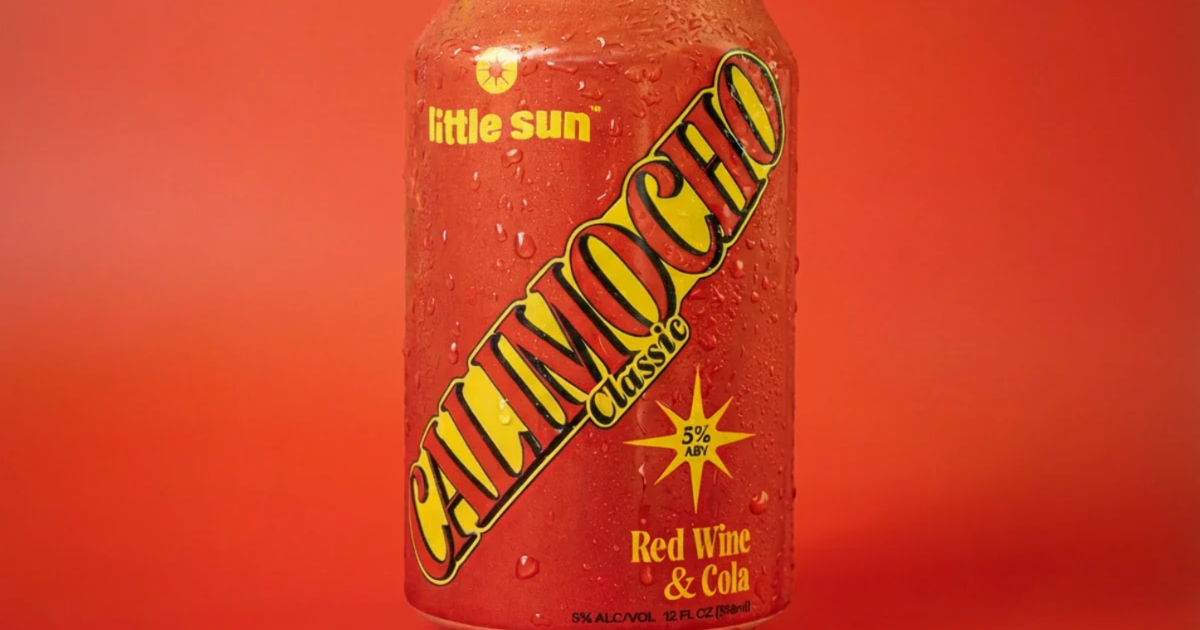
Two California upstarts are banking on American drinkers embracing Spain’s messiest, most democratic cocktail — wine mixed with cola.
Here’s what I’ve learned after 25 years judging spirits and RTDs: sometimes the best category innovations aren’t about reinventing the wheel. They’re about recognizing that a flavor combination that already works in one market is ready to explode in another. That’s exactly what Little Sun and Wine and Cola are betting on with their takes on Kalimotxo — the Spanish wine-and-cola hybrid that’s been a staple at Spanish festivals, university parties, and casual social gatherings for decades. It’s unpretentious, it’s social, and it’s refreshingly agnostic about wine quality (which is part of its charm). Now two Southern California teams think Americans are ready to stop making it at home and start buying it ready-made.
The category timing is sharp. We’ve watched RTDs graduate from college-party fuel to genuinely crafted beverage occasions. Wine spritzers evolved. Hard seltzers matured. Hard teas found their lane. The wine-cola hybrid occupies interesting real estate — it’s lower ABV than most spirits-based RTDs, it’s approachable for non-wine drinkers, and there’s genuine cultural currency around the Spanish tradition. Both brands are positioned for on-premise and retail, which tells me the founders understand this isn’t just a novelty play; it’s a format that can live in bars and fridges alongside established categories.
Here is The Proof
The real test here isn’t whether Americans will drink wine and cola — they already do, usually in ad-hoc, cost-conscious moments. The test is whether a brand can convince buyers and consumers that a pre-made version justifies shelf space and price premium over a bottle of wine and a bottle of cola sitting next to each other. Little Sun and Wine and Cola are banking on convenience, consistency, and the cultural authenticity of the Spanish tradition to close that gap.
What makes this moment different from previous RTD misadventures is that these brands aren’t trying to “improve” Kalimotxo or dress it up for Instagram. They’re honoring what makes it work: simplicity and social ease. That respect for the original usually wins in beverage innovation. The California location is smart too — proximity to wine country, proximity to Spanish cultural roots, and a market that already thinks about wine differently than the rest of the country. Expect to see these two battle for dominance in a category that, if executed well, could become a genuine category player in the next two to three years.
Comments are closed